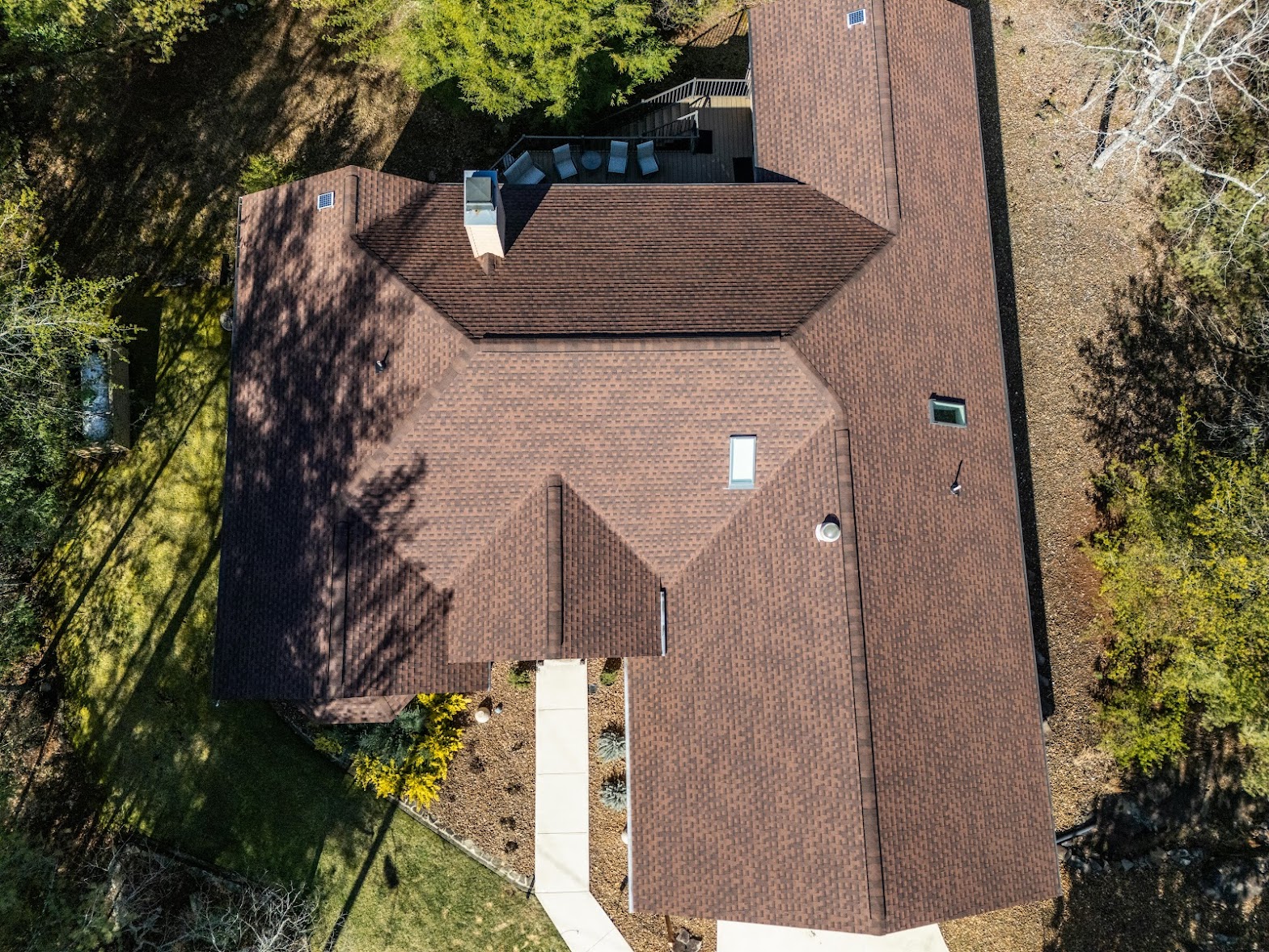
When most homeowners picture a roof inspection, they imagine someone climbing a ladder, glancing at the shingles, and coming back down with a thumbs up or a sales pitch. A real inspection is nothing like that. A proper roof inspection is a methodical, point-by-point evaluation that starts inside your attic and ends at the smallest piece of flashing around your chimney — and the difference between the two approaches can cost you thousands of dollars in missed damage.
At Jeff Woods Construction & Roofing, we’ve been inspecting and repairing roofs across Tennessee’s Upper Cumberland and East Tennessee for more than 25 years. As a GAF Master Elite and President’s Club roofing contractor, we follow a fixed inspection sequence on every single roof we look at, whether it’s a quick storm check in Crossville or a full pre-purchase evaluation in Knoxville. This guide walks you through that exact checklist, step by step, so you understand precisely what a thorough roof inspection should include — and how to tell whether the inspector standing on your roof is actually doing the job right.
By the end of this article, you’ll know what gets checked, why each item matters in Tennessee’s specific climate, and how to read the findings so you can make a confident decision about repair, replacement, or simply waiting and monitoring.
Tennessee roofs take a beating that homeowners in milder climates never deal with. We get high summer heat, sudden hailstorms, straight-line winds, ice in the higher elevations around Fairfield Glade and Crossville, and the kind of dramatic temperature swings that quietly destroy roofing materials over time. That last one is so common here that we’ve written a separate guide on thermal shock roof damage in Tennessee, because it’s one of the most overlooked causes of premature shingle failure in our region.
All of this means a Tennessee roof needs to be inspected differently than a roof in a dry, stable climate. An inspector who doesn’t understand local weather patterns will miss the early warning signs that matter most here. Wind-lifted shingles, hail bruising, granule loss from heat cycling, and ice-related flashing damage all show up in specific ways, and you have to know where to look.
A complete inspection protects you in three ways. It catches small problems before they become structural ones, it gives you documented evidence if you ever need to file a storm or insurance claim, and it gives you an honest answer to the question every homeowner eventually asks: do I repair this or replace it? If you’re weighing that decision, our guide on roof repair or replacement breaks down how to make the right call.
A thorough roof inspection happens in two phases, and skipping either one leaves the picture incomplete. The interior phase happens inside your attic and ceilings, where the earliest evidence of roof problems almost always appears first. The exterior phase happens on the roof surface itself, evaluating every component that keeps water out.
Most rushed “inspections” skip the interior phase entirely. That’s a mistake, because a leak that hasn’t yet stained your ceiling is often already visible in the attic as a water mark on the decking. Catching it there can be the difference between a small repair and a replaced section of roof. As we explain in our guide on where your roof is actually leaking, water rarely enters at the spot where you see the damage inside, which is exactly why the attic inspection is so valuable.
Let’s walk through each phase in the order we actually perform them.
This is where a real inspection begins. Before anyone gets on the roof, we evaluate what the roof looks like from underneath.
We start in the living space, looking at ceilings and the tops of interior walls for water stains, discoloration, bubbling paint, or sagging. A brown ring on a ceiling is the most obvious sign of an active or past leak, but subtle shadowing in corners and along exterior walls matters too. We note the location of every stain so we can trace it back to a source on the roof.
Inside the attic, we inspect the underside of the roof decking and the rafters with a flashlight. We’re looking for dark water stains, streaking, soft or spongy wood, and any spot where daylight is visible through the boards. Daylight coming through the decking means there’s a hole or gap that water can follow. Stained or rotted decking is one of the most common things homeowners never knew they had, and it directly affects whether a roof can be repaired or needs full replacement.
Wet, compressed, or discolored insulation is a reliable fingerprint of a leak, even when the decking above it has dried out. We check for damp spots and matting, which tell us water has been getting in even if there’s no active drip at the moment.
Persistent moisture in an attic leads to mold and mildew, which show up as dark or fuzzy patches on wood and insulation. Beyond the roofing implications, this is a home-health issue, so we flag any growth we find.
Poor attic ventilation shortens the life of any roof, especially in Tennessee’s heat. Without proper intake and exhaust, attic temperatures soar, baking shingles from below and accelerating the granule loss and brittleness that lead to early failure. We check that soffit vents, ridge vents, and any powered or static vents are present, unblocked, and actually moving air. Inadequate ventilation is one of the quiet reasons roofs in our region don’t last as long as homeowners expect, a topic we cover in how long different roof types last in Tennessee.
With the interior picture documented, we move to the roof surface. This is the part most people think of as “the inspection,” and it has the most individual checkpoints.
We examine the entire field of the roof for shingles that are missing, cracked, curled, buckled, or lifted at the edges. Curling and buckling usually point to age, heat damage, or ventilation problems. Lifted or missing shingles point to wind damage. On metal roofs we look for loose panels, backed-out fasteners, and seam separation instead. If you’re comparing materials for an eventual replacement, our roofing materials guide for the Tennessee climate explains how each type holds up here.
Asphalt shingles are protected by a layer of mineral granules. As shingles age or take hail and heat damage, those granules wash off and collect in gutters and at downspout outlets. We check the shingle surface for bald, shiny spots and inspect the gutters for granule buildup, because heavy granule loss is a strong sign a roof is nearing the end of its service life.
Hail leaves distinct circular bruises and dents, and wind leaves creased or torn shingles. These are the findings that most often support an insurance claim, so we document them carefully with photos and location notes. If you’ve had a recent storm, our storm damage roofing guide and our advice on when to get your roof checked after high winds explain what to do next.
Flashing is the metal that seals the joints where the roof meets something else — chimneys, walls, skylights, and vent pipes. It’s responsible for a huge share of all roof leaks, because these transition points are where water concentrates. We check that flashing is intact, properly sealed, and not rusted, lifted, or pulling away. Loose or failed flashing around a chimney is one of the single most common leak sources we find.
Every pipe, vent, and exhaust that pokes through the roof is sealed with a boot or collar. Rubber pipe boots are notorious for cracking and drying out in Tennessee sun long before the surrounding shingles fail, creating a small but persistent leak. We inspect every penetration individually.
Roof valleys are where two slopes meet and channel the largest volume of water off the roof. Because they handle so much runoff, they’re high-stress areas prone to leaks and wear. We check that valleys are clear, properly sealed, and free of cracking or lifted material.
The drip edge is the metal flashing along the eaves and rakes that directs water into the gutter and away from the fascia and decking. A missing or improperly installed drip edge lets water wick back under the roofing and rot the wood beneath. We confirm it’s present and correctly installed — a detail we cover in depth in our drip edge installation guide.
Clogged or sagging gutters back water up under the roof edge and cause damage that has nothing to do with the shingles themselves. We check that gutters are secure, draining properly, and free of the granule buildup that signals shingle wear.
The fascia (the board behind the gutter) and the soffit (the underside of the eave) are the first wood components to show rot when water is getting where it shouldn’t. Peeling paint, soft spots, and visible decay here are red flags that often connect back to a gutter or drip edge problem.
Beyond their flashing, we inspect the masonry of the chimney for cracks and deteriorating mortar, and we check skylights for cracked seals and signs of water intrusion around the frame.
Finally, we step back and assess the roof as a whole. A roofline that dips, waves, or sags can indicate a structural problem in the decking or rafters underneath, which is far more serious than a surface issue and needs immediate attention.
A real inspection ends with documentation, not just a verbal summary. We provide written findings with photos of any damage, an explanation of what we found and how urgent it is, and a clear recommendation. That recommendation generally falls into one of three buckets: no action needed beyond monitoring, targeted repair, or full replacement.
If repair or replacement is on the table, photo documentation becomes especially important for any insurance conversation. Having dated, location-specific photos of hail bruising or wind damage is often what makes the difference in a claim, which is why we treat the documentation step as seriously as the inspection itself.
One thing we’ll never do is invent damage to sell a job. If your roof is fine, we’ll tell you it’s fine and when to have it looked at again. A trustworthy inspection sometimes ends with “you don’t need us yet,” and that honesty is a big part of why our customers come back.
For most Tennessee homes, we recommend a professional inspection once a year, ideally in late summer or early fall before the harsher weather sets in. On top of that annual check, you should always have your roof inspected after any major storm with hail or high winds, even if you don’t see obvious damage from the ground. A lot of storm damage is invisible from the yard and only becomes apparent — and expensive — months later when a leak finally shows up inside.
Older roofs, or roofs you suspect are nearing the end of their life, benefit from more frequent checks. If you’re not sure how old your roof even is, our guide on determining your roof’s age can help you figure it out.
If an inspection reveals it’s time for a new roof, you don’t have to guess what the result will look like. Our free Roofing Visualizer tool lets you preview different shingle colors and styles on a home before you commit, which takes a lot of the stress out of choosing.
How long does a professional roof inspection take? A thorough inspection typically takes 45 minutes to an hour for an average home, longer for larger or more complex roofs. Anything that wraps up in ten minutes almost certainly skipped the interior and attic phase, which is where the most valuable early warning signs appear.
Is a roof inspection really free? Jeff Woods Construction offers free roof inspections across our Tennessee service area. A legitimate free inspection should still include the full checklist above and end with written, photo-documented findings — not just a sales pitch. You can schedule one here.
Do I need a roof inspection before buying a home in Tennessee? Yes. A standard home inspection usually includes only a cursory look at the roof. A dedicated roof inspection gives you a much clearer picture of the roof’s true condition and remaining life, which can be significant leverage in a purchase negotiation and can save you from inheriting an expensive problem.
Can I inspect my own roof? You can safely check some things from the ground with binoculars — missing or lifted shingles, sagging, debris in gutters — and you can check your attic for stains and daylight. But getting on a roof is dangerous, and the most important findings (flashing condition, hail bruising, subtle granule loss) require trained eyes. For anything beyond a ground-level glance, leave it to a professional.
What’s the difference between a roof inspection and a roof estimate? An inspection evaluates the current condition of your roof and documents any problems. An estimate is a price quote for specific repair or replacement work. A good contractor performs the inspection first, then provides an estimate only if work is actually needed.
My roof looks fine from the ground. Do I still need an inspection after a storm? Yes. Hail and wind damage frequently aren’t visible from ground level, and the damage they cause — bruised shingles, lifted edges, cracked boots — can take months to turn into a visible leak. By then the underlying decking may already be compromised. A post-storm inspection catches this while it’s still cheap to fix.
Whether you’ve just weathered a storm, you’re buying or selling a home, or you simply haven’t had your roof looked at in a few years, a complete inspection is the smartest, lowest-cost step you can take to protect one of your biggest investments. Jeff Woods Construction & Roofing has provided honest, thorough roof inspections across Crossville, Cookeville, Knoxville, and the surrounding Tennessee communities for over 25 years.
Call us at (931) 787-7715 or reach out through our contact page to schedule your free, no-pressure roof inspection. We’ll walk your roof through every point on this checklist and give you honest, documented answers — whether that means a repair, a replacement, or simply peace of mind.